


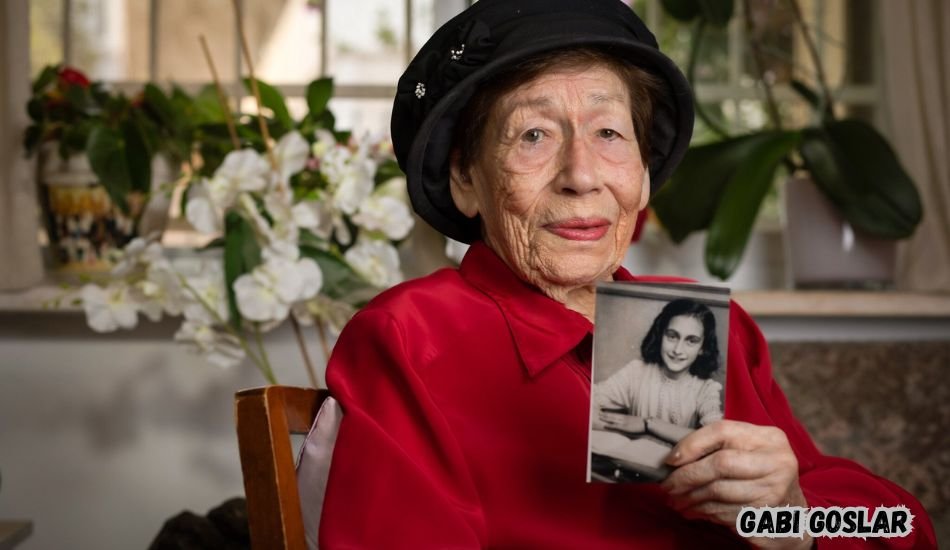
Gabi Goslar was the best friend of Anne Frank, the young Jewish girl whose diary became world-famous after World War II. Born as Hannah Elisabeth “Hanneli” Goslar in Berlin, Germany, in 1928, she was known by her nickname “Gabi” or “Hanneli” to friends. Like Anne, Gabi was also a victim of Nazi persecution and was deported to the Bergen-Belsen concentration camp, where she briefly reunited with Anne before her death. Gabi survived the Holocaust and later moved to Israel, where she became a nurse and started a family. Her memories of Anne Frank have provided a valuable, firsthand perspective on Anne’s life and the horrors of the Holocaust. Gabi Goslar passed away in 2022 at the age of 93.
Quick Biography
| Detail | Information |
|---|---|
| Full Name | Rachel Gabriele Ida Goslar |
| Known As | Gabi Goslar |
| Date of Birth | October 25, 1940 |
| Place of Birth | Amsterdam, Netherlands |
| Nationality | Dutch-born, later Israeli |
| Religion | Jewish |
| Parents | Father: Hans Yitzkhak Goslar, Mother: Ruth Judith Klee |
| Sibling | Hannah Elisabeth Pick-Goslar (sister) |
| Husband | Mr. Mozes |
| Children | Information kept private |
| Holocaust Experience | Survivor of Westerbork, Bergen-Belsen, and the “Lost Train” |
| Memoir | I Have to Tell Someone (2010) |
| Death | 2017, Israel |
| Age at Death | 77 years |
Early Life and Family Background
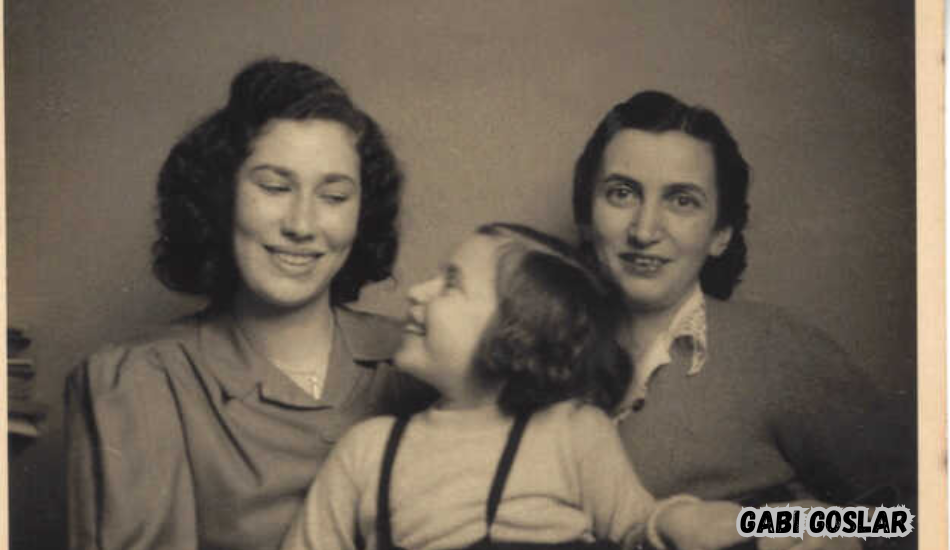
Gabi Goslar was born Rachel Gabriele Ida Goslar on October 25, 1940, in Amsterdam, to a Jewish family that had escaped Nazi Germany. Her parents, Hans Yitzkhak Goslar and Ruth Judith Klee, were born in Berlin but later relocated to the Netherlands to escape escalating antisemitism. Gabi was born in a period of increasing dread and uncertainty, barely months after the Nazi conquest of the Netherlands.
She was the younger sister of Hannah Elisabeth Goslar (Hanneli), who was famous for her close friendship with Anne Frank. Despite the challenging political context, the Goslar family remained committed to Jewish traditions and values. However, their efforts to stay safe were futile, as they were eventually captured and deported by the Nazis. Gabi experienced her early years in hiding, transit camps, and, ultimately, the horrors of Bergen-Belsen.
Gabi Goslar’s Father
Hans Yitzkhak Goslar, a German-Jewish journalist and public worker, was born in Berlin. He was a high-ranking official in the Weimar Republic’s Ministry of Internal Affairs until the Nazi dictatorship compelled him to depart Germany. Hans, a devoted and intelligent man, relocated his family to Amsterdam in the hopes of seeking refuge from rising antisemitism. He was the father of Hannah (Hanneli) and Rachel (Gabi) Goslar. Hans died tragically at the Bergen-Belsen detention camp in 1945, having endured years of persecution and misery.
Gabi Goslar’s Mother
Ruth Judith Klee was born into a German-Jewish household and later married Hans Yitzkhak Goslar. She, like her husband, had a solid education and was profoundly committed to her family and beliefs. Ruth fled Nazi Germany and lived with her family in Amsterdam, searching for refuge. During the Holocaust, she was jailed alongside her husband and daughters. Ruth perished in the Bergen-Belsen concentration camp in early 1945, just before the war ended.
Also, Read More: Kelly South: Celebrity Life & Inspiring Journey Revealed
Hannah Elisabeth Pick-Goslar: Sister
Hannah Elisabeth Pick-Goslar, also known as Hanneli, was Gabi Goslar’s older sister and a close childhood friend of Anne Frank. Born in 1928, she had many of the same traumatic experiences as her sister during the Holocaust. Hanneli and her family were sent to the Bergen-Belsen concentration camp, where she was briefly reunited with Anne Frank. After surviving the war, she relocated to Israel and shared her memories to help preserve the tale of Anne Frank and the Holocaust.
The Strong Bond Between Gabi and Hannah
Gabi and her older sister Hannah developed a strong and supportive friendship from an early age. Growing up in a Jewish home amid the height of Nazi persecution, the sisters leaned on one another for comfort and support. Their close bond helped them overcome their worry and uncertainty about their family’s safety.
Gabi and Hannah’s bond became stronger during their time in hiding and, ultimately, in concentration camps. They faced the horrors of the Holocaust together, giving each other hope in the worst moments. This sisterly link provided them with tenacity, allowing them to persevere in the face of terrible tragedy.
Growing Up Amidst War
Gabi Goslar’s upbringing was dominated by the looming prospect of World War II and Nazi persecution. She was born in Amsterdam in 1940 and experienced her early years in a world full of terror, uncertainty, and danger. Gabi, like many other Jewish youngsters at the period, lost her innocence to the harsh realities of war and prejudice.
Despite the chaos, Gabi’s family attempted to safeguard her and her sister by seeking refuge and going into hiding. However, the Nazi occupation made survival impossible, and the Goslars were eventually arrested and deported to concentration camps. Gabi’s upbringing became a struggle for survival, highlighted by both loss and the strength of family relationships.
Escape from the Holocaust
Gabi Goslar was liberated in 1945 after suffering the horrific conditions of Westerbork, Bergen-Belsen, and the harrowing “Lost Train,” The end of World War II offered her freedom, but it also presented her with the enormous burden of rebuilding her life following years of suffering and grief. Despite being physically free, she carried emotional scars from the camps.
Gabi’s release signaled the start of a difficult journey toward recovery and resilience. She finally relocated to Israel, where she rebuilt her life, worked as a nurse, and began a family. Her survival tale is a striking monument to human tenacity and optimism even in the darkest of times.
Rebuilding Life After the Holocaust
After surviving the horrors of the Holocaust, Gabi Goslar faced the enormous job of rebuilding her life. She immigrated to Israel and dedicated herself to helping others by training and working as a nurse. Her dedication to healing represented both her resilience and her need to make sense of her difficult history.
Gabi also worked to preserve the memory of those who died during the conflict, recounting her story in her memoir I Have to Tell Someone. She established a family and community in Israel, transforming her survival into a legacy of hope, remembering, and resilience for years to come.
Marriage and Home Life
Gabi Goslar married Mr. Mozes, and they established a private family life centered on love, support, and recovery from the horror of the Holocaust. Although information about their children was kept confidential, her family was a constant source of strength and solace throughout her life.
Gabi’s experience as a wife and mother helped her discover new purpose and joy beyond the shadows of her past. She balanced her obligations by working as a nurse and telling her story, ensuring that her family and heritage were respected.
Link to Anne Frank’s Story
Gabi Goslar’s sister, Hannah Elisabeth (Hanneli), was one of Anne Frank’s closest childhood friends, hence Gabi was tangentially linked to Anne’s narrative. She joined a community of people who were highly touched by the horrific events of the Holocaust and Anne’s legacy as a result of her sister’s acquaintance.
Gabi later found Anne in the Bergen-Belsen concentration camp, where they had a brief but poignant reunion. This relationship made Gabi’s memories essential for comprehending Anne Frank’s existence beyond the renowned diary, retaining a personal and human perspective on history.
From Survivor to Advocate
Gabi Goslar spent most of her later life writing and speaking about her experiences during the Holocaust. Her memoir, I Have to Tell Someone (2010), is a highly intimate narrative of survival, loss, and hope that contributes to the education of future generations about the evils of the Holocaust.
Aside from her literature, Gabi became an advocate for Holocaust memorial and human rights, highlighting the value of tolerance and understanding. Her work made a vital contribution to preserving the memories of those who suffered and ensuring that this history is never forgotten.
Last Years and Passing
Gabi Goslar spent her last years quietly in Israel, focusing on her family and continuing to share her story to teach others about the Holocaust. Despite the enduring effects of her history, she stayed dedicated to promoting themes of hope, perseverance, and the value of remembering.
Gabi died in 2017, at the age of 77. Her death marked the loss of a great historical witness, but her legacy lives on through her memoir and the many people she touched with her narrative.
A Legacy of Resilience
Gabi Goslar’s tale is a stunning monument to perseverance, tenacity, and the human spirit. Through her narrative and public campaigning, she educated future generations about the horrors of the Holocaust and the significance of remembering its victims. Her firsthand tales continue to inspire empathy and raise awareness around the world.
Beyond her personal narrative, Gabi’s legacy is her commitment to preserving history and fostering tolerance. By sharing her experiences, she guaranteed that past lessons were not lost, inspiring future generations to fight bigotry and injustice.
Economic Overview
Gabi Goslar’s net worth and financial life are somewhat unknown, as her tale is most known for her Holocaust survival and advocacy activities. She led a modest life, prioritizing family, nursing, and preserving history over financial growth. Her legacy is centered on her contributions to education and remembrance, rather than financial achievement.
FAQs
Who was Gabriel Goslar?
Gabi Goslar, born Rachel Gabriele Ida Goslar in 1940, was a Holocaust survivor most recognized for her memoir and advocacy efforts. She survived a number of concentration camps, notably Bergen-Belsen, and eventually dedicated her life to teaching others about the Holocaust.
What is Gabi Goslar’s link with Anne Frank?
Gabi’s sister, Hannah (Hanneli) Goslar, was Anne Frank’s close childhood friend. Gabi was briefly reunited with Anne in the Bergen-Belsen concentration camp, therefore her memories are an important component of Anne Frank’s historical story.
Did Gabi Goslar write about her experiences?
Yes, Gabi wrote a biography called I Have to Tell Someone in 2010, which details her own story through the Holocaust and her survival despite all difficulties.
Also, Read More: Michelle Goeringer: Celebrity Life, Career & Family Insights
Where did Gabi Goslar live after WWII?
Gabi immigrated to Israel after the war, where she worked as a nurse, started a family, and continued to advocate for the preservation of Holocaust memory.
How did Gabi Goslar help to Holocaust education?
Gabi used her narrative, public speaking, and campaigning to increase awareness of the Holocaust, emphasizing the value of tolerance, memory, and standing up to intolerance.
When did Gabi Goslar pass away?
Gabi Goslar died in Israel in 2017 at the age of 77, leaving behind a legacy of perseverance and commitment to Holocaust commemoration.
Final Thoughts
Gabi Goslar’s life story is a remarkable testament to courage and survival in the face of unimaginable hardship. From her early years overshadowed by war to her dedication to preserving history, she embodies the resilience of the human spirit. Her memoir and advocacy efforts ensure that the lessons of the Holocaust continue to resonate with future generations.
By sharing her experiences, Gabi not only honored those who were lost but also provided hope and strength to those who follow. Her legacy is a powerful reminder of the importance of memory, education, and the unwavering fight against intolerance and injustice.

